

1 - I Didn’t Go Looking for Spiritual Direction — It Found Me
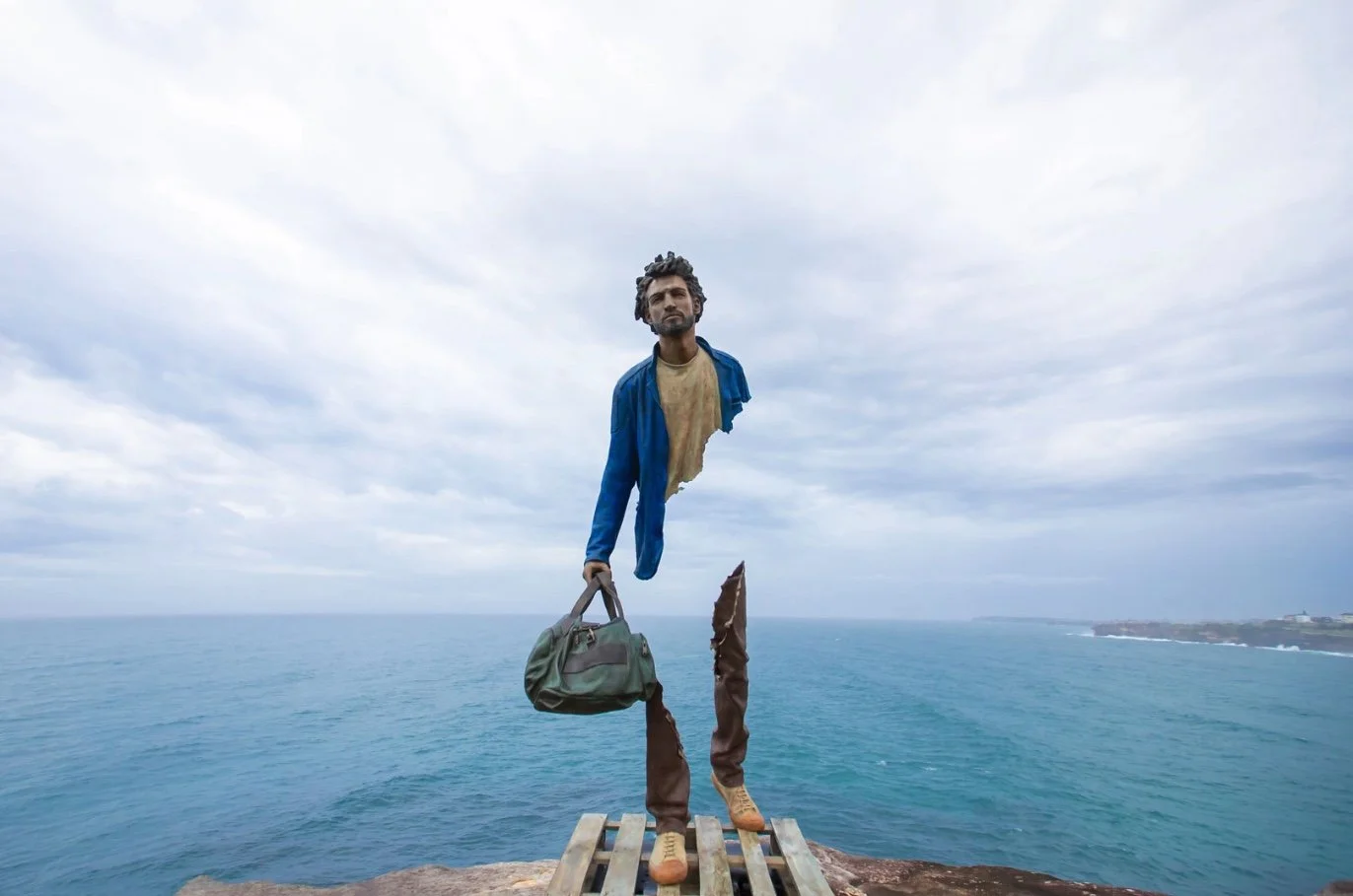
Sculpture by the Sea by Bruno Catalano
I didn’t go looking for spiritual direction—it found me.
Not all at once. Not through a retreat, a book, or a church brochure.
It found me through pain and suffering, through silence, and through the unexpected kindness of people who stayed when I wasn’t sure I wanted them to.
And it began in the desert.
In 2003, I returned to Portugal from seminary in Brazil. I should have felt accomplished—I held a theology degree and years of missionary experience. But instead, I came home with a broken heart and a deep weariness I didn’t know how to name.
A personal loss, a painful breakup, spiritual abuse, and what I now recognize as burnout had all collided. Emotionally and spiritually, I was unraveling.
I reached out to my family and my church, hoping someone might notice how much I was struggling. But the kind of help I needed just wasn’t part of the world I came from.
Where I grew up, emotional pain was something you pushed through or swept under the rug. Vulnerability often made people uncomfortable. And in the church, grace sometimes felt optional. Correction was always available, but comfort was harder to find.
Looking back, I understand that people were offering what they knew. They were doing what had been done for them. But at the time, I felt completely alone.
That loneliness hardened into anger, then bitterness, and eventually I walked away — from the church, from the calling I thought I had, and from hope itself.
The depression deepened. Suicidal thoughts became part of my daily life. Life felt chaotic, and I clung to control in the only way I knew how.
And yet, even there, God did not leave.
That is one of the quiet revelations spiritual direction has helped me see: God was never the same as the people who hurt me, and God was never the same as the systems that could not hold my pain.
Healing began when I stopped pretending.
When I started being honest — with myself, with God, and eventually with others — something in me began to open. Not all at once, and not with easy answers, but with the first movement toward truth.
That is often how spiritual direction begins.
Not with certainty, but with honesty.
Not with perfect language, but with the courage to tell the truth about what is happening in the soul.
For many of us, the first step toward healing is not solving everything. It is finding a safe place to be seen, heard, and held. It is noticing that God is still present, even in the places where we thought we had been abandoned.
Spiritual direction matters because it creates that kind of space.
A space where pain is not rushed.
A space where shame is not the final word.
A space where the hidden story can be brought into the light, gently and without fear.
Sometimes we do not need a louder voice. We need a steadier one.
Sometimes we do not need to be corrected before we are understood.
Sometimes we need someone to help us notice that God has been nearer than we realized.
If you are in a season of unraveling, you may not need to force yourself to be stronger. You may need a place where the truth can be spoken slowly, safely, and with compassion.
That is where spiritual direction can begin to find us too.
And often, that is where healing begins.
Chapter 2 coming soon
Next Chapter: What I couldn’t say in church—and what silence left behind.
About the author :
Ana is the founder of Sacred Friendship, a ministry offering spiritual direction, spiritual formation and soul care rooted in God’s love and presence.. She carries a deep calling to create quiet spaces where people can slow down, be seen, and encounter God's healing love.
Having walked through her own deserts of loss, grief, burnout, and rediscovery, Ana now companions others on their journeys of faith, healing, and spiritual formation.
